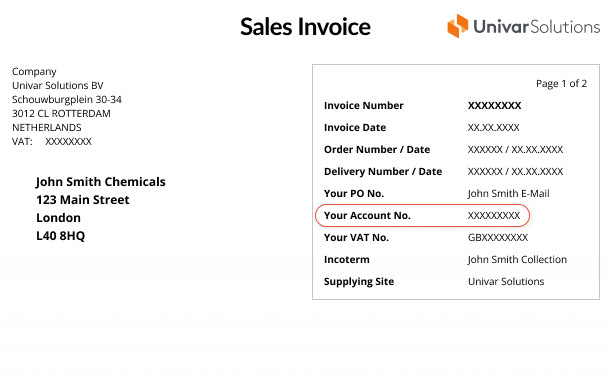
Complete the following form to download your document.
Il BILANCIO DI MASSA:
SPIEGAZIONE
La spinta e la pressione del mercato a favore del cambiamento
La necessità di una sostenuta azione per il clima, che preveda la riduzione delle emissioni e una maggiore efficienza delle risorse, cui si accompagnano opportunità di spostarsi su soluzioni più sostenibili, rappresentano nel loro complesso fattori trainanti fondamentali per costruire un futuro più sostenibile. Nel corso del XX secolo, i fornitori globali di sostanze chimiche hanno fatto largamente ricorso ai combustibili fossili per alimentare i siti produttivi, migliorare i processi chimici, costruire portafogli di prodotti e la logistica dei trasporti e della distribuzione. Adesso, la diversificazione e la modifica dei materiali di base vengono ampiamente ritenute parte della soluzione nel quadro del generale abbandono dei combustibili fossili all’interno dell’industria.
In concomitanza con questa spinta dall’interno del settore, è anche aumentata la domanda (pressione) di materiali riciclati da parte dei clienti a valle. Da un recente rapporto Smartest Energy(L’energia più intelligente) emerge che l’81% dei consumatori sceglie con maggiore probabilità i marchi che intraprendono azioni concrete a favore di un mondo più sostenibile. Ciò nonostante, il 45% dei consumatori non è a conoscenza delle pratiche adottate dai marchi per favorire la sostenibilità ambientale; pertanto, esiste un divario tra adozione di pratiche ecocompatibili e trasparenza nelle comunicazioni lungo tutta la catena logistica dei prodotti chimici.
The Challenge
The chemical industry uses a small set of raw materials (or feedstocks) to produce tens of thousands of products. Traditionally this feedstock has been derived from fossil-based material.
When recycled feedstocks enter the same manufacturing system as fossil-based feedstocks, they cannot exist in physically divided flows. Separating and delivering these two different feedstocks at scale is often associated with operational and economic feasibility challenges.
L’adozione del bilancio di massa da parte dell’industria
Nell’intento di colmare questo divario, nell’industria chimica si è diffuso in particolare il mass balance approach (approccio bilancio di massa), che negli ultimissimi anni sta riscuotendo una crescente attenzione.
Attualmente, non si può attribuire alla biochimica la funzione di valida soluzione per passare rapidamente e su larga scala a materiali di base rinnovabili; si frappongono limitazioni intrinseche, che comprendono fattori come la disponibilità di materiali di base dei prodotti, le infrastrutture, i limiti della ricerca e dello sviluppo, accanto a valutazioni di costo; rappresenta comunque un significativo passo avanti perché l’economia circolare prenda piede.
Come funziona?
Il bilanciamento di massa è una catena di custodia in cui i materiali certificati e non certificati sono fisicamente mescolati, ma vengono tenuti distinti dal punto di vista contabile. È un metodo che consente di documentare e tracciare materiali circolari, biocircolari e biologici attraverso sistemi di produzione complessi.
Mediante il bilancio di massa, le aziende possono tracciare quanti materiali circolari, biocircolari e biologici siano stati impiegati nei loro sistemi di produzione e garantirne l’esatta corrispondenza al contenuto certificato nel prodotto finale.
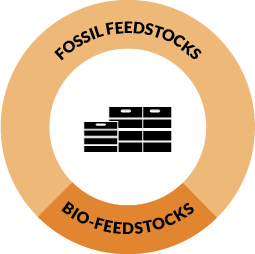
Il bilancio di massa rappresenta un passo graduale dei produttori, diretto a sostituire con fonti circolari una percentuale del contenuto di combustibile fossile presente in un prodotto (non rinnovabile). I principali materiali di base di origine fossile dell’industria chimica sono la nafta e il gas naturale, che vengono ulteriormente trattati tramite cracking od ossidazione parziale a temperature elevate. Tali materiali di base vengono sostituite nei prodotti con materiali di origine biologica, ad esempio la bionafta e il biogas (biometano) accanto a materiali di base tradizionali recuperati e riciclato.
Grazie a questo metodo, restano inalterate la qualità e le prestazioni consuete del prodotto, che però si avvale di una soluzione che consente una sostituzione immediata sostenibile, contribuendo consapevolmente alla tutela ambientale e contenendo gli effetti della crisi climatica.
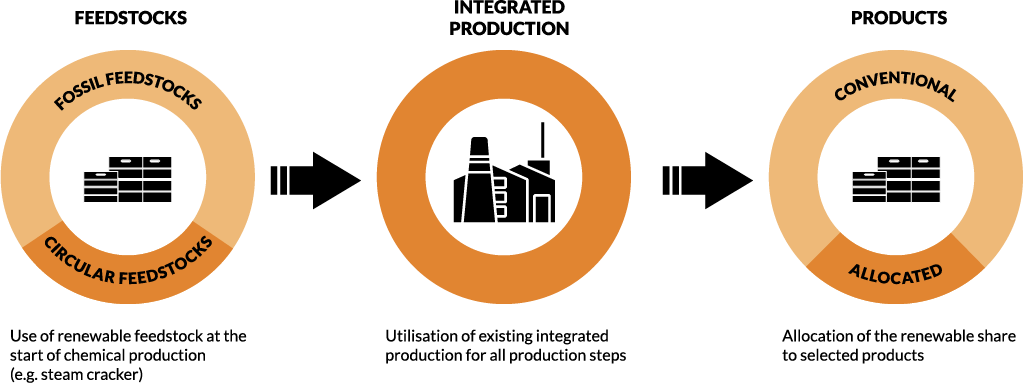
Feedstocks
Use of renewable feedstock at the start of chemical production(e.g. steam cracker)

Integrated Production

Utilisation of existing integrated production for all production steps
Products
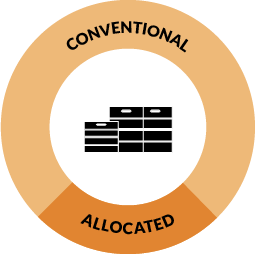
Allocation of the renewable share to selected products
Key benefits of Mass Balance
- Easy accountability
- Gives formulators a sustainable 'drop-in' solution
- Significant reduction of carbon footprint/greenhouse gases
- The same product quality/efficacy is attained
- No need to adapt formulations, plants, or processes
- It can be implemented directly
- Certified according to well-accepted standards like REDcert2
- Removes the need for separate processing units & their potential environmental impact
- Enhances sustainability value proposition of products from source
- Early adoption encourages a gradual increase of renewable feedstock supply
Vantaggi principali del bilancio di massa

Agevole controllo delle responsabilità

Offre ai responsabili della formulazione una soluzione che consente una sostituzione immediata sostenibile
Notevole riduzione dell’impronta di carbonio/gas serra

Si conserva la stessa qualità/efficacia del prodotto

Nessuna necessità di adattare formule, impianti o processi

Si può realizzare direttamente

Certificazione secondo norme ampiamente accettate come REDcert2

Elimina la necessità di unità di trattamento separate e il loro potenziale impatto sull’ambiente

Migliora l’offerta di valore in termini di sostenibilità dei prodotti fin dalla fonte

La rapidità dell’implementazione incentiva un progressivo aumento dell’approvvigionamento di materiali di base rinnovabili
Key benefits of Mass Balance
- Easy accountability
- Gives formulators a sustainable 'drop-in' solution
- Significant reduction of carbon footprint/greenhouse gases
- The same product quality/efficacy is attained
- No need to adapt formulations, plants, or processes
- It can be implemented directly
- Certified according to well-accepted standards like REDcert2
- Removes the need for separate processing units & their potential environmental impact
- Enhances sustainability value proposition of products from source
- Early adoption encourages a gradual increase of renewable feedstock supply
Conclusione
Il Mass Balance Approach è un metodo innovativo e semplice al tempo stesso; consente di valutare gli effetti ambientali del ciclo di vita di prodotti a base biologica e circolari, senza creare intere catene di valore separate rispetto ai percorsi basati sui fossili.
More on Sustainable & Circular
Transizione alla circolarità

Scopri come Univar Solutions può aitarti a procedere nel percorso verso un’Economia circolare, soppiantando i combustibili fossili con un mass balance approach.
Scopri ulteriori informazioni sulla transizione alla circolarità
THE ISCC

ISCC strives for a world where biomass and other raw materials are produced in an environmentally, socially, and economically sustainable manner.
La collaborazione tra Dow e Univar

Univar Solutions ha collaborato con DOW per proporne i prodotti di riciclo avanzato ai clienti. Scopri come questa collaborazione potrebbe favorire i tuoi obiettivi di sostenibilità.
Leggi il comunicato stampa
Collegamenti e fonti utili
- https://www.iscc-system.org/about/circular-economy/mass-balance-approach/
- PlasticsEurope position paper on the "Mass balance approach to accelerate the use of renewable feedstocks in chemical processes" (29 January 2020)
- https://www.epa.gov/ghgemissions/global-greenhouse-gas-emissions-data#:~:text=Since
- https://www.basf.com/global/en/who-we-are/sustainability/we-drive-sustainable-solutions/circular-economy/mass-balance-approach/biomass-balance.html
- https://www.recyclinglives.com/news/general/report-reveals-81-people-prefer-buy-sustainable-sellers
- Study "A methodology for integrating the biomass balance approach into life cycle assessment with an application in the chemicals sector" by Adisa Azapagic et al. in "Science of the total environment" (2019)
- Mass balance approach for the sustainable chemicals transition
As a global leader in chemical and ingredient distribution, we take our Environment, Social, and Governance (ESG) responsibilities seriously, and:

Employ environmentally conscious protocols and technologies

Encourage community engagement

Establish practices and partnerships with integrity
More on Sustainable & Circular
Link to ISCC Acreditation page

cras fermentum odio eu feugiat pretium nibh ipsum consequat nisl vel pretium lectus quam id leo in vitae turpis massa sed elementum tempus egestas sed sed s
ESG Link

cras fermentum odio eu feugiat pretium nibh ipsum consequat nisl vel pretium lectus quam id leo in vitae turpis massa sed elementum tempus egestas sed sed s
Campaign Page Link
cras fermentum odio eu feugiat pretium nibh ipsum consequat nisl vel pretium lectus quam id leo in vitae turpis massa sed elementum tempus egestas sed sed s
Sustainable Solutions
Discover how we can help customers develop and market sustainable products
Sustainable Solutions

Explore how Univar Solutions delivers sustainability solutions to our customers:
- Sustainable & Natural Product Framework
- Sustainable Formulations
- Sustainable Services
2025 Goals
In an effort to drive meaningful change and show our continuous commitment, we've outlined a new set of ESG sustainability goals.
These ambitious standards will allow us to better serve our customers, employees, and partners today, so that together, we can shape a better tomorrow.
2025 Goals
In an effort to drive meaningful change and show our continuous commitment, we've outlined a new set of ESG sustainability goals.
These ambitious standards will allow us to better serve our customers, employees, and partners today, so that together, we can shape a better tomorrow.

Climate Action
Implement technology, processes, and culture to support our sustainability journey.
Reach 20% absolute reduction in CO2e emissions by 2025, and 40% by 2030
Achieve net-zero direct emissions by 2050

Safety
Keep our employees, vendors, and customers safe at work
By 2025, reduce TCIR by 20%
Achieve 100% alignment by and utilization on our global safety program by 2025

Resource Use
Embed the principles of circularity and operational excellence.
Reduce hazardous waste and water waste by 15% by 2025
Triple non-hazardous waste recycling rates by 2025
Introduce sustainble water use at all high-risk sites
Release Prevention
Support the responsible handling of materials across our operations and supply chain.
Reduce significant chemical releases by 40% by 2025

Sustainable Sourcing
Drive improved sustainability performance and minimum standards across our diverse supplier base.
By 2023, get 100% of active suppliers to agree to our Code of Conduct
Assess 80% of suppliers on their sustainability performance (by spend) by 2025

Diversity, Equity & Inclusion
Increase representation across the organization and encourage employees to lead with their authentic selves.
Maintain a 100% score on the Corporate Equality Index, and at least a 78% score on the Employee Engagement Diversity & Inclusion Index
Increase female representation and ethnic diversity at the people leader level (and above) by 2025

Sustainable Solutions
Leverage sustainable products, services, and practices.
Develop sustainable characteristics for all products
Communicate the key sustainability impacts for non-product-related services
Offer circular packaging solutions for all suitable products

Community Engagement
Demonstrate our committment to local communities
Make charitable contributions through the Univar Solutions Foundation (or other similar means)
Establish employee volunteer hour contributions, and company matching gift contributions
Climate Action
Implement technology, processes, and culture to support our sustainability journey.
Reach 20% absolute reduction in CO2e emissions by 2025, and 40% by 2030
Achieve net-zero direct emissions by 2050
Safety
Keep our employees, vendors, and customers safe at work
By 2025, reduce TCIR by 20%
Achieve 100% alignment by and utilization on our global safety program by 2025
Resource Use
Embed the principles of circularity and operational excellence.
Reduce hazardous waste and water waste by 15% by 2025
Triple non-hazardous waste recycling rates by 2025
Release Prevention
Support the responsible handling of materials across our operations and supply chain.
Reduce significant chemical releases by 40% by 2025
Sustainable Sourcing
Drive improved sustainability performance and minimum standards across our diverse supplier base.
By 2023, get 100% of active suppliers to agree to our Code of Conduct
Assess 80% of suppliers on their sustainability performance (by spend) by 2025
Diversity, Equity & Inclusion
Increase representation across the organization and encourage employees to lead with their authentic selves.
Maintain a 100% score on the Corporate Equality Index, and at least a 78% score on the Employee Engagement Diversity & Inclusion Index
Increase female representation and ethnic diversity at the people leader level (and above) by 2025
Resources & Reporting
Explore helpful ESG reporting, performance, and policy resources